
Yeast Conversion: Fresh Yeast to Dry Yeast & Instant Yeast Ratios
TL;DR / Quick Summary: The exact conversion ratio between fresh yeast and dry yeast is 3:1 by weight because fresh compressed yeast consists of roughly 70% moisture. A standard European block of fresh yeast (42 grams) equals 14 grams of dry yeast (exactly 2 standard packets or 1.5 tablespoons) and leavens 1 kg (2.2 lbs) of flour. Conversely, a single standard 7-gram packet of dry yeast replaces 21 grams of fresh yeast (half a block). Active dry yeast requires blooming in warm water with sugar, whereas instant yeast requires no starter and mixes straight into dry flour.
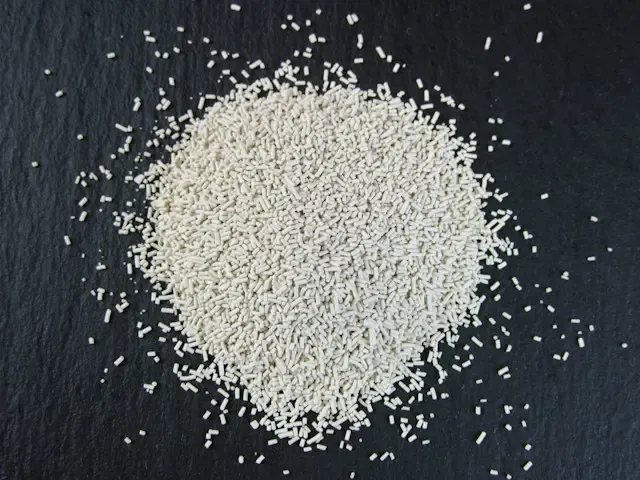
How Do You Convert Fresh Yeast to Dry Yeast?
The mathematical conversion ratio between active fresh yeast (compressed cake yeast) and dry yeast is fixed at 3:1, because dry yeast is three times more concentrated due to industrial moisture extraction. To convert fresh yeast to dry yeast, divide the fresh yeast weight by 3 (Dry Yeast = Fresh Yeast / 3). To convert dry yeast into fresh yeast, multiply the dry yeast weight by 3 (Fresh Yeast = Dry Yeast × 3).
In practical terms, 1 gram of dry yeast replaces exactly 3 grams of fresh yeast. Because fresh compressed yeast consists of approximately 70% water, industrial drying removes water down to approximately 5% to 8% residual moisture while keeping the live yeast cells (Saccharomyces cerevisiae) dormant. The total leavening cell count relative to dry solids remains identical.
Basic Mathematical Formulas Overview:
-
From Fresh Yeast to Dry Yeast:
Dry Yeast (g) = Fresh Yeast (g) / 3
Example: 21 g fresh yeast (1/2 block) / 3 = 7 g dry yeast (1 packet).
Example: 42 g fresh yeast (1 full block) / 3 = 14 g dry yeast (2 packets).
Example: 50 g fresh yeast / 3 = 16.7 g dry yeast (~2.4 packets). -
From Dry Yeast to Fresh Yeast:
Fresh Yeast (g) = Dry Yeast (g) × 3
Example: 7 g dry yeast (1 packet) × 3 = 21 g fresh yeast (1/2 block).
Example: 14 g dry yeast (2 packets) × 3 = 42 g fresh yeast (1 full block). -
Ratio to Flour (Standard Dosing for Quick Fermentation):
- 500 g (4 cups / 1.1 lbs) Flour: 21 g fresh yeast (1/2 block) or 7 g dry yeast (1 packet / approx. 2¼ teaspoons).
- 1000 g (8 cups / 2.2 lbs) Flour: 42 g fresh yeast (1 full block) or 14 g dry yeast (2 packets / approx. 1½ tablespoons).
How Much Dry Yeast Equals 1 Block of Fresh Yeast?
A standard commercial block of fresh baking yeast in Europe weighs 42 grams and equals exactly 14 grams of dry yeast, which corresponds to 2 standard packets of dry yeast (7 grams / ¼ oz each) or 1.5 level tablespoons. Half a block of fresh yeast (21 grams) equals 1 packet of dry yeast (7 grams) and is calibrated for 500 grams (approx. 4 cups) of flour.
In North America, fresh compressed yeast is frequently packaged in small 0.6-ounce (17-gram) cakes. One 17-gram cake of fresh yeast equals approximately 5.7 grams of dry yeast (approx. 0.8 packet, 1.8 teaspoons, or 0.6 tablespoon), designed for 350 to 400 grams of flour. If a European recipe specifies “1 block of fresh yeast,” use 14 grams (2 packets) of dry yeast. If a recipe specifies “1 packet of dry yeast,” substitute 21 grams (half an EU block) of fresh yeast.

Convert Yeast & Baking Ingredients Instantly
Use the free Kitchen Converter for precise calculations of yeast, flour, liquids, and baking pan sizes.
Which Yeast Requires Sugar and Warm Liquid to Activate?
Active Dry Yeast (ADY) is the traditional dehydrated yeast variety that must be dissolved in warm liquid (100°F–110°F / 38°C–43°C) with a pinch of sugar for 5 to 10 minutes before being incorporated into flour. The warm liquid rehydrates dormant cells, while sugar supplies immediate fuel to confirm viability via a frothy foam head.
Active dry yeast undergoes a gentle dehydration process that leaves dormant live cells encapsulated inside a protective coating of dehydrated and dead yeast cells. If active dry yeast is mixed straight into dry flour without pre-dissolving, these outer shells dissolve irregularly, resulting in slow dough expansion, uneven crumb structure, and visible yeast speckles.
Why Sugar is Added to Active Dry Yeast:
- Enzymatic Fuel Source: Rehydrated yeast cells immediately produce invertase and zymase enzymes that ferment sucrose into simple monosaccharides (glucose and fructose), releasing carbon dioxide ($CO_2$) bubbles.
- Visual Proofing (“Blooming”): If a thick, aromatic foam forms on top of the liquid within 10 minutes, the yeast culture is active and strong. If the liquid stays still with sunken pellets, the yeast has expired and should be discarded.
- Critical Liquid Temperature: Keep proofing liquids between 100°F and 110°F (38°C–43°C). Temperatures under 95°F (35°C) fail to dissolve the outer cell shell properly, while temperatures above 115°F (46°C) kill yeast cells permanently.
Which Yeast Does Not Need a Starter or Pre-Ferment?
Instant yeast (also labeled as RapidRise, Quick-Rise, or Bread Machine yeast) requires no liquid starter, blooming, or sugar pre-ferment and is whisked directly into dry flour. Its ultra-fine microscopic granules hydrate upon contact with recipe liquids during kneading without delay.
Instant yeast is produced from specially cultured yeast strains with high initial enzymatic activity. During manufacturing, fluidized-bed driers dry the cells rapidly, and small amounts of sorbitan monostearate (an edible emulsifier) are applied to the particle surface. This allows water to penetrate the cell membrane without requiring an initial soaking stage.
Practical Guidelines for No-Starter Yeast:
- Direct Flour Blending: Add instant yeast straight into your flour and dry ingredients along with salt and sugar, then add your room-temperature or lukewarm liquids (105°F–120°F / 40°C–49°C).
- Speed of Fermentation: Instant yeast produces carbon dioxide faster during the first 30 to 45 minutes than active dry yeast, making it optimal for single-rise sandwich breads, quick pizza doughs, and automatic bread machines.
- No Sugar Needed for Activation: Instant yeast does not need added sugar to begin working; its enzymes hydrolyze maltose and starches present naturally in flour.
[CTA / Internal Link: Calculate custom flour-to-yeast ratios with our free Baking Converter -> /en/]
How Do Fresh, Active Dry, and Instant Yeast Compare?
Fresh yeast yields deep aromatic complexity with a short shelf life, active dry yeast provides long pantry storage while requiring liquid proofing with sugar, and instant yeast provides fast activation by blending directly into dry ingredients.
| Technical Parameter | Fresh Yeast (Compressed / Cake) | Active Dry Yeast (ADY) | Instant Yeast (RapidRise) |
|---|---|---|---|
| Moisture Content | ~70% water | ~8% water | ~5% water |
| Needs Starter / Blooming? | Recommended in lukewarm liquid | Yes (100°F–110°F liquid proof) | No (Mixes straight into dry flour) |
| Needs Added Sugar? | Optional (speeds initial rise) | Yes (Pinch needed for proofing) | No (Consumes natural flour starches) |
| Conversion Factor (vs. Fresh) | 1.0 (Baseline weight) | 0.33× fresh weight | 0.25× to 0.33× fresh weight |
| Retail Package Size | 42 g block (EU) / 17 g cake (US) | 7 g packet (¼ oz / 2¼ tsp) | 7 g packet (¼ oz / 2¼ tsp) |
| Storage Temperature | 35°F–46°F (Refrigerated) | 65°F–75°F (Cool pantry) | 65°F–75°F (Airtight pantry) |
| Shelf Life | 2 to 3 weeks (can be frozen) | 12 to 24 months | Up to 24 months |
| Primary Culinary Application | Braided brioche, stollen, artisan sourdoughs | Enriched rolls, standard white bread, bagels | Pizza dough, no-knead bread, bread makers |
Conversion Chart: Fresh Yeast vs. Dry Yeast, Packets & Tablespoons
The conversion chart below outlines the precise weights, retail packet counts, and spoon measurements for fresh compressed yeast and dry yeast relative to flour quantities (from 250 g to 1,200 g / 2.6 lbs).
| Flour Amount (Grams / Cups) | Fresh Yeast (Grams / Block) | Dry Yeast (Grams) | Dry Yeast Packets (7 g / ¼ oz) | Dry Yeast in Teaspoons (tsp) | Dry Yeast in Tablespoons (tbsp) | Recommended Dough / Recipe |
|---|---|---|---|---|---|---|
| 250 g flour (~2 cups) | 10.5 g (~¼ block) | 3.5 g | ½ packet | approx. 1.1 tsp | 0.37 tbsp | Small focaccia, single pizza, flatbread |
| 500 g flour (~4 cups) | 21.0 g (½ block) | 7.0 g | 1 packet | approx. 2.25 tsp | 0.75 tbsp | Standard sandwich loaf, classic pizza |
| 750 g flour (~6 cups) | 31.5 g (~¾ block) | 10.5 g | 1.5 packets | approx. 3.4 tsp | 1.12 tbsp | Large artisan loaf, sheet pan cake |
| 1000 g flour (~8 cups) | 42.0 g (1 full block) | 14.0 g | 2 packets | approx. 4.5 tsp | 1.50 tbsp | 2 bread loaves, party sheet pizza |
| 1200 g flour (~9.5 cups) | 50.0 g (~1.2 blocks) | 16.7 g | ~2.4 packets | approx. 5.3 tsp | 1.78 tbsp | Large batch baking, holiday brioche |
Volumetric Density Reference: 1 level teaspoon (tsp) of dry yeast weighs 3.1 to 3.5 grams. 1 level tablespoon (tbsp = 3 tsp) of dry yeast weighs 9.3 to 10.5 grams. 1 heaped teaspoon of dry yeast weighs approximately 5 grams.
How Does Handling Fresh Yeast Differ From Dry Yeast?
Fresh yeast must be dissolved in lukewarm liquid (optimal temperature 86°F–95°F / 30°C–35°C) with a pinch of sugar prior to mixing to ensure smooth distribution, whereas dry yeast can either be bloomed (active dry) or blended directly into dry flour (instant). Furthermore, fresh yeast requires refrigeration and spoils within weeks, while sealed dry yeast remains shelf-stable for months.
Key Differences in Detail:
- Activation & Sponge (Preferment):
- Fresh Yeast: Dissolve by crumbling into lukewarm milk or water (max 100°F / 38°C). Temperatures exceeding 113°F (45°C) denature yeast cell walls and kill the culture.
- Dry Yeast: Active dry yeast requires a 10-minute water soak with a pinch of sugar; instant yeast can be whisked into flour without any liquid preferment.
- Flavor & Rising Characteristics:
- Fresh Yeast: Imparts a traditional, slightly sweet, nutty aroma characteristic of European bakeries and expands rapidly during the first 30 minutes of room-temperature proofing.
- Dry Yeast: Offers a clean, neutral aroma with reliable rise consistency and withstands mechanical kneading variations well.
- Storage & Moisture Content:
- Fresh Yeast: Contains ~70% water and must be refrigerated at 35°F–46°F (2°C–8°C). It can also be portioned and frozen for up to 6 months.
- Dry Yeast: Contains only ~5% to 8% residual moisture and can be kept in a cool, dark pantry. After opening, refrigerate in an airtight container.
Kitchen Converter App for iOS & Android
Get the free app for fast conversions while cooking & baking. 100% offline with auto-scaling for yeast, flour, and baking pans.
How Do You Scale Yeast for Long Proofing or Cold Fermentation (Refrigerator)?
For long fermentation times of 12 to 48 hours in the refrigerator, drastically reduce yeast quantities to 0.1% to 1.0% of total flour weight to prevent over-proofing and gluten breakdown. For 500 grams of flour in a 24-hour cold-proof Neapolitan pizza dough, use only 0.5 to 1.0 gram of fresh yeast (or 0.2 to 0.3 grams of dry yeast).
Standard recipe dosing (21 g fresh yeast per 500 g flour = ~4.2%) is engineered for quick room-temperature rising within 45 to 60 minutes. Extending fermentation in the refrigerator gives bacterial and enzymatic processes time to break down complex starches, producing exceptional aroma, blistered crusts, and improved digestibility with a small fraction of the yeast.
Rules of Thumb for Yeast Scaling by Proofing Time:
- Fast Rising (1 hour proof at room temperature, 68°F–72°F / 20°C–22°C):
- 500 g flour → 21 g fresh yeast (4.2%) or 7 g dry yeast (1 packet).
- Medium Rising (3–5 hours proof at room temperature):
- 500 g flour → 5 to 7 g fresh yeast (~1.0%–1.4%) or 2 g dry yeast (~½ tsp).
- Long Cold Fermentation (24–48 hours in fridge at 39°F–43°F / 4°C–6°C):
- 500 g flour → 1 to 2 g fresh yeast (0.2%–0.4%) or 0.5 g dry yeast (~⅛ tsp).
[CTA / Internal Link: Download Kitchen Converter App for free on iOS & Android -> /en/#download]
Frequently Asked Questions About Yeast Conversion (FAQ)
How many tablespoons of dry yeast are in 1 packet of fresh yeast?
One standard European 42-gram fresh yeast block/packet converts to 1.5 level tablespoons (14 grams / 4.5 level teaspoons) of dry yeast. If you are using a North American 0.6-ounce (17-gram) commercial fresh yeast cake, it converts to approximately 0.6 to 0.75 level tablespoons (5.7 grams / approx. 1.8 to 2¼ teaspoons) of dry yeast.
7 grams of dry yeast is equivalent to how much fresh yeast?
Seven grams of dry yeast is equivalent to exactly 21 grams of fresh yeast, based on the standard 3:1 conversion ratio. This corresponds to exactly one standard commercial packet of dry yeast (¼ ounce / 2¼ teaspoons) or half of a conventional 42-gram fresh yeast block, formulated to ferment 500 grams (approx. 4 cups) of flour.
How much dry yeast is equivalent to 50 grams of fresh yeast?
Fifty grams of fresh yeast is equivalent to 16.67 grams of dry yeast (50 divided by 3). In kitchen measures, this equals approximately 2.4 standard 7-gram dry yeast packets, roughly 5.3 level teaspoons, or 1.78 level tablespoons of active dry or instant yeast.
How much dry yeast is 42 grams of fresh yeast?
Forty-two grams of fresh yeast equals exactly 14.0 grams of dry yeast (42 divided by 3). In retail packaging and kitchen volume, this corresponds precisely to 2 standard packets of dry yeast (7 grams / ¼ oz each), 4.5 level teaspoons, or 1.5 level tablespoons.
How much fresh yeast is equivalent to 1 packet of dry yeast?
One standard packet of dry yeast contains 7 grams (¼ ounce / 2¼ teaspoons) and is equivalent to 21 grams of fresh yeast (7 multiplied by 3). When substituting fresh yeast for a recipe calling for one packet of dry yeast, use half of a standard 42-gram fresh yeast block.
Can you substitute instant yeast 1:1 for active dry yeast?
Yes, instant yeast can replace active dry yeast at a 1:1 ratio by weight, provided you skip the warm liquid proofing step and mix instant yeast directly into dry flour. Because instant yeast has roughly 20% higher active cell density, reducing the amount by 15% to 20% (e.g., using 5.5–6 g instant yeast for 7 g active dry) yields identical fermentation speed.
Can you use expired dry yeast or old fresh yeast?
Fresh yeast loses leavening power past its expiration date, indicated by a dark, crumbly, or dried surface. Dry yeast often remains active past expiration if kept dry and sealed. Test activity beforehand: stir 1 teaspoon dry yeast and ½ teaspoon sugar into 50 ml (¼ cup) lukewarm water. If no thick foam develops within 10 minutes, the yeast cells are inactive.
How much dry yeast equals 1 gram of fresh yeast?
One gram of fresh yeast equals exactly 0.33 grams of dry yeast. When scaling cold-fermented doughs like artisan bread or Neapolitan pizza that call for 3 grams of fresh yeast, use exactly 1 gram of dry yeast (approx. ⅓ level teaspoon).
Why does dough fail to rise despite correct yeast conversion?
The most common cause of dough failure is liquid temperature: liquids above 115°F (46°C) kill yeast cells. Direct contact with concentrated salt or excessive sugar also inhibits yeast osmotic pressure. Always mix yeast with flour and liquid before incorporating salt.
Can you freeze fresh yeast and how do you convert it afterward?
Yes, fresh yeast can be frozen in tightly wrapped portions for up to 6 months. Upon thawing, the cell structure softens and releases liquid, but leavening power remains intact. The conversion ratio remains unchanged at 3:1 (3 grams of thawed fresh yeast equals 1 gram of dry yeast).
How do you convert yeast for gluten-free flour?
Gluten-free flours lack gluten protein networks to trap carbon dioxide bubbles. Gluten-free yeast doughs typically require 20% to 25% more yeast combined with binders such as psyllium husk or xanthan gum to achieve satisfactory loaf volume and crumb structure.